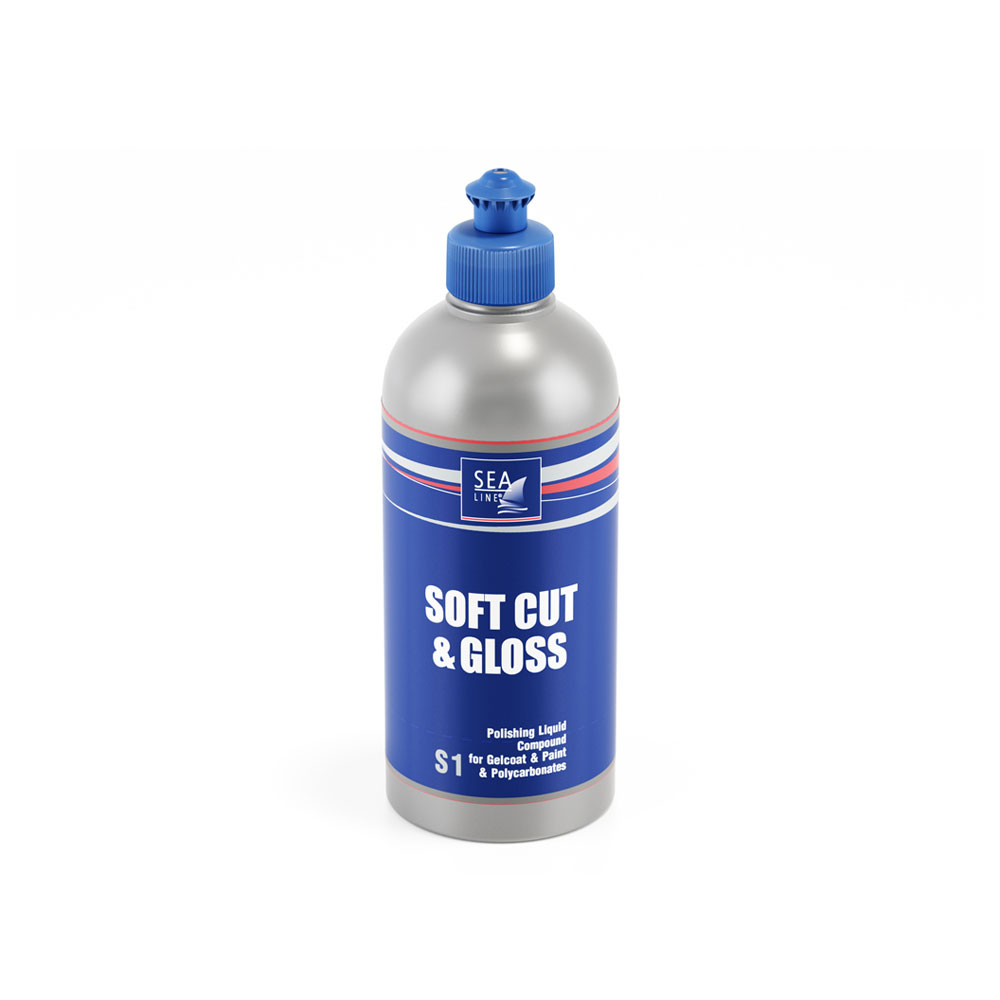
S1 SOFT CUT & GLOSS – Polishing paste thanks to its versatility can be used in industrial as well as DIY use.
This is a perfect product for charter companies or private boat owners which have to restore gloss on different type of surfaces. The paste does not contain wax and silicone fillers.
| Weight | Code |
|---|---|
| 500 g | 300005578 |
No silicone
| Surface | gelcoat, polyurethane paints nad varnishes, plexi, polycarbonate | |||
| Function | removing defects from the surface gloss restoring | |||
| Consistency | liquid – creame paste | |||
| UV resistance level | very low | |||
| Surface preparation * | mechanical grinding | manual grinding | ||
| light color | dark color | light color | dark color | |
| gelcoat | P1200 ⇒ | P1500 ⇒ | P1500 ⇒ | P2000 ⇒ |
| polyurethane paint | P1200 ⇒ | P1500 ⇒ | P1500 ⇒ | P2000 ⇒ |
| plexi, polycarbonate | P2000 ⇒ | P2000 ⇒ | P2000 ⇒ | P2000 ⇒ |
| high hardness surfaces | P1500 ⇒ | P2000 ⇒ | P2000 ⇒ | P2000 ⇒ |
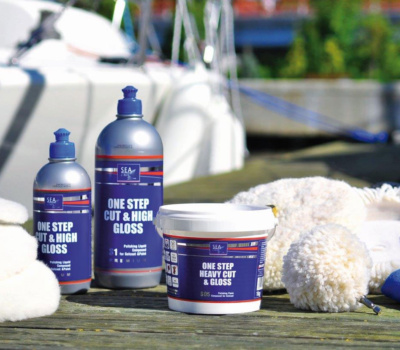
Polishing systems meet all stages of production, as well as during repair work, renovations or
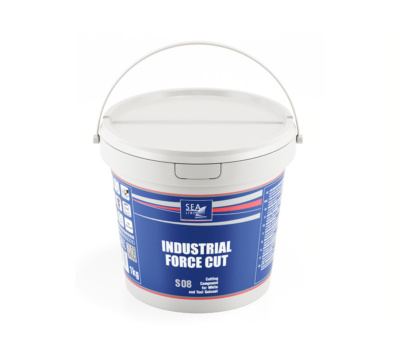
Primarily designed for the companies which produce goods or forms made of gelcoat or an
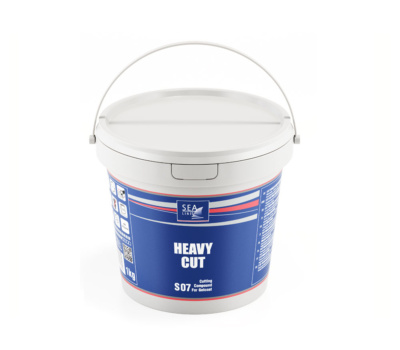
S07 Heavy Cut Sea-Line is specialistic polishing paste with a very high cutting force which
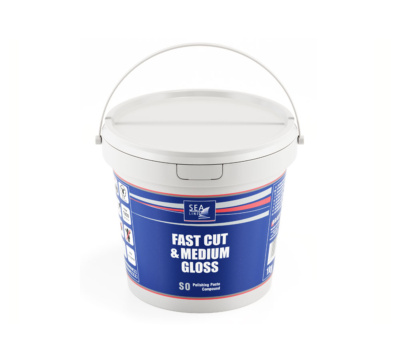
S0 polishing compound Sea-Line is a polishing paste is designed for professionals – manufacturers, shipyards
Troton Sp z o.o.
78-120 Gościno
Ząbrowo 14A
Polska
Sąd Rejonowy w Koszalinie IX Wydz. KRS 0000187692;
Kapitał zakładowy 8 215 000 PLN


 Facebook
 YouTube
 Instagram
 Guide
Guide Contact
 Newsletter